Although I found this story rather dull, indolent and unexciting, the story was delivered clearly and the Flash interaction was well executed. This makes me think about communicating ideas to people through storyboards and story telling.
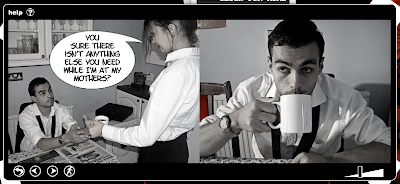
I discussed with my study advisor, Dr Shaleph O'Neil about how people may react to certain storyboards. There will be 3 different types of storyboard: 1. Hand drawn 2. Graphically illustrated and 3. Interactive.
The interactive storyboard will obviously be digital, however as Dead On Arrival shows, Flash animations can contain very "un-digital" and natural interactions. For example the turning of pages; this is done by clicking the top or bottom corners of a page and dragging them over, almost as you would do a book.
Computer interactions can be very natural. This reminds of the beauty of the interaction design of an iPhone or iPod Touch when zooming in and out of photos or web pages. Pinching your fore-finger and thumb together, a natural human gesture for describing the reduction in size of an object, is how to zoom out (i.e. to make smaller), and vice-versa.
How natural can I design interactions?
I don't mean to compare an iPhone with a digital comic, however the principle of their interactions are comparable in terms of natural gesture. There is biological consideration into their design.
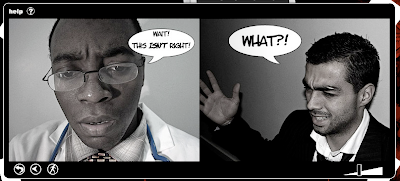
Click here to see the Dead on Arrival comic. An HTML version of the comic is also available, which I think is rather pointless. The whole beauty of the story is the interaction itself.


